in order to retain heat, what occurs in the skin on a cold day?
The Integumentary Arrangement
Functions of the Integumentary Arrangement
Learning Objectives
By the terminate of this section, you lot will be able to:
- Describe the different functions of the pare and the structures that enable them
- Explain how the skin helps maintain body temperature
The skin and accompaniment structures perform a multifariousness of essential functions, such as protecting the torso from invasion by microorganisms, chemicals, and other environmental factors; preventing dehydration; acting as a sensory organ; modulating body temperature and electrolyte balance; and synthesizing vitamin D. The underlying hypodermis has important roles in storing fats, forming a "absorber" over underlying structures, and providing insulation from cold temperatures.
Protection
The skin protects the rest of the body from the bones elements of nature such every bit wind, water, and UV sunlight. Information technology acts equally a protective bulwark confronting water loss, due to the presence of layers of keratin and glycolipids in the stratum corneum. It also is the first line of defense against annoying activeness due to contact with grit, microbes, or harmful chemicals. Sweat excreted from sweat glands deters microbes from over-colonizing the skin surface past generating dermicidin, which has antibiotic properties.
Everyday Connection
Tattoos and Piercings The discussion "armor" evokes several images. You might think of a Roman centurion or a medieval knight in a accommodate of armor. The pare, in its own way, functions as a form of armor—body armor. It provides a barrier between your vital, life-sustaining organs and the influence of outside elements that could potentially damage them.
For any form of armor, a breach in the protective barrier poses a danger. The peel can be breached when a kid skins a articulatio genus or an adult has blood drawn—i is adventitious and the other medically necessary. However, yous also alienation this bulwark when you choose to "accessorize" your skin with a tattoo or torso piercing. Because the needles involved in producing trunk art and piercings must penetrate the skin, there are dangers associated with the practice. These include allergic reactions; peel infections; blood-borne diseases, such every bit tetanus, hepatitis C, and hepatitis D; and the growth of scar tissue. Despite the take chances, the practice of piercing the skin for decorative purposes has go increasingly pop. According to the American Academy of Dermatology, 24 percent of people from ages 18 to l have a tattoo.
Tattooing has a long history, dating back thousands of years ago. The dyes used in tattooing typically derive from metals. A person with tattoos should exist cautious when having a magnetic resonance imaging (MRI) scan because an MRI machine uses powerful magnets to create images of the soft tissues of the body, which could react with the metals independent in the tattoo dyes. Watch this video to learn more than well-nigh tattooing.
Sensory Function
The fact that you can feel an pismire crawling on your skin, allowing you to flick it off before it bites, is considering the skin, and especially the hairs projecting from hair follicles in the skin, can sense changes in the environment. The pilus root plexus surrounding the base of the hair follicle senses a disturbance, and then transmits the data to the primal nervous organisation (encephalon and spinal string), which can then answer by activating the skeletal muscles of your optics to see the ant and the skeletal muscles of the body to act against the pismire.
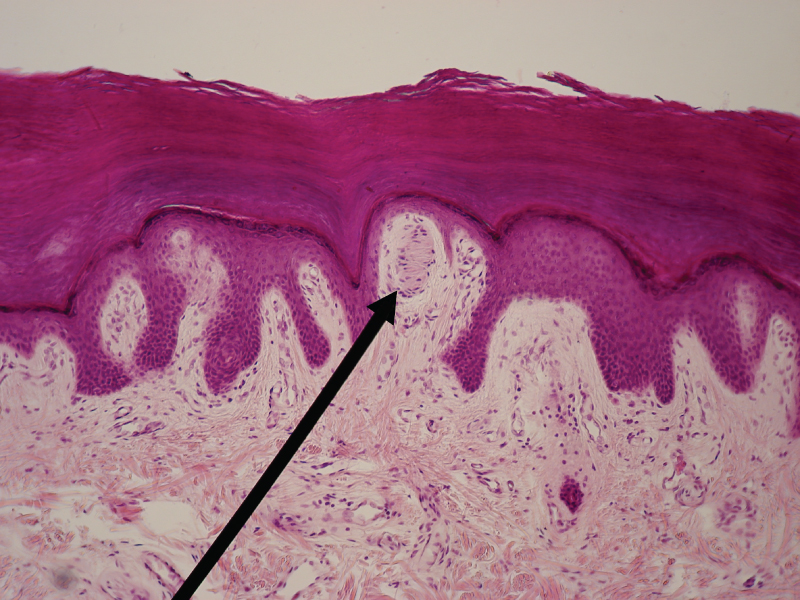
The skin acts as a sense organ considering the epidermis, dermis, and the hypodermis contain specialized sensory nerve structures that detect affect, surface temperature, and hurting. These receptors are more concentrated on the tips of the fingers, which are virtually sensitive to touch, peculiarly the Meissner corpuscle (tactile corpuscle) ((Effigy)), which responds to light touch, and the Pacinian corpuscle (lamellated corpuscle), which responds to vibration. Merkel cells, seen scattered in the stratum basale, are also touch receptors. In addition to these specialized receptors, there are sensory nerves connected to each hair follicle, hurting and temperature receptors scattered throughout the skin, and motor fretfulness innervate the arrector pili muscles and glands. This rich innervation helps the states sense our surroundings and react accordingly.
Lite Micrograph of a Meissner Corpuscle
In this micrograph of a skin cross-section, yous can see a Meissner corpuscle (arrow), a type of touch receptor located in a dermal papilla adjacent to the basement membrane and stratum basale of the overlying epidermis. LM × 100. (credit: "Wbensmith"/Wikimedia Commons)
Thermoregulation
The integumentary arrangement helps regulate body temperature through its tight clan with the sympathetic nervous system, the division of the nervous system involved in our fight-or-flight responses. The sympathetic nervous system is continuously monitoring body temperature and initiating advisable motor responses. Recall that sweat glands, accompaniment structures to the skin, secrete water, common salt, and other substances to absurd the torso when it becomes warm. Even when the body does not appear to be noticeably sweating, approximately 500 mL of sweat (insensible perspiration) are secreted a day. If the torso becomes excessively warm due to loftier temperatures, vigorous activity ((Figure)ac), or a combination of the two, sweat glands volition be stimulated past the sympathetic nervous system to produce large amounts of sweat, as much as 0.7 to one.5 50 per hour for an active person. When the sweat evaporates from the skin surface, the body is cooled as trunk heat is dissipated.
In addition to sweating, arterioles in the dermis dilate so that backlog rut carried past the blood can dissipate through the peel and into the surrounding environment ((Figure)b). This accounts for the pare redness that many people feel when exercising.
Thermoregulation
During strenuous physical activities, such equally skiing (a) or running (c), the dermal blood vessels dilate and sweat secretion increases (b). These mechanisms forbid the torso from overheating. In contrast, the dermal blood vessels tuck to minimize oestrus loss in response to depression temperatures (b). (credit a: "Trysil"/flickr; credit c: Ralph Daily)
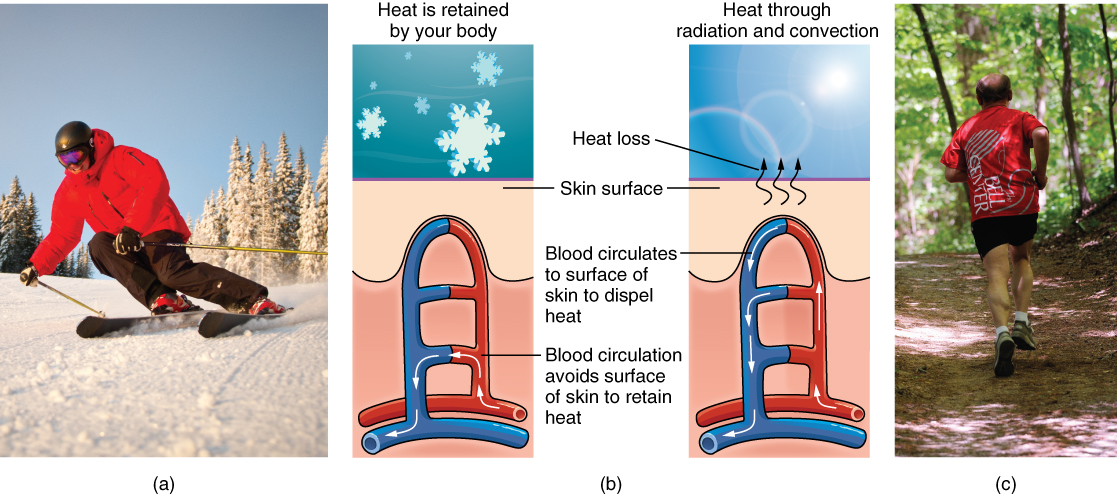
When trunk temperatures drib, the arterioles tuck to minimize heat loss, specially in the ends of the digits and tip of the nose. This reduced circulation can result in the pare taking on a whitish hue. Although the temperature of the skin drops as a outcome, passive heat loss is prevented, and internal organs and structures remain warm. If the temperature of the pare drops too much (such equally environmental temperatures below freezing), the conservation of body core oestrus can result in the skin really freezing, a condition called frostbite.
Aging and the…
Integumentary System All systems in the body accrue subtle and some not-so-subtle changes every bit a person ages. Amongst these changes are reductions in cell sectionalisation, metabolic activity, blood circulation, hormonal levels, and muscle strength ((Effigy)). In the pare, these changes are reflected in decreased mitosis in the stratum basale, leading to a thinner epidermis. The dermis, which is responsible for the elasticity and resilience of the pare, exhibits a reduced ability to regenerate, which leads to slower wound healing. The hypodermis, with its fat stores, loses construction due to the reduction and redistribution of fatty, which in turn contributes to the thinning and sagging of skin.
Aging
More often than not, pare, especially on the face and hands, starts to display the first noticeable signs of crumbling, every bit it loses its elasticity over fourth dimension. (credit: Janet Ramsden)
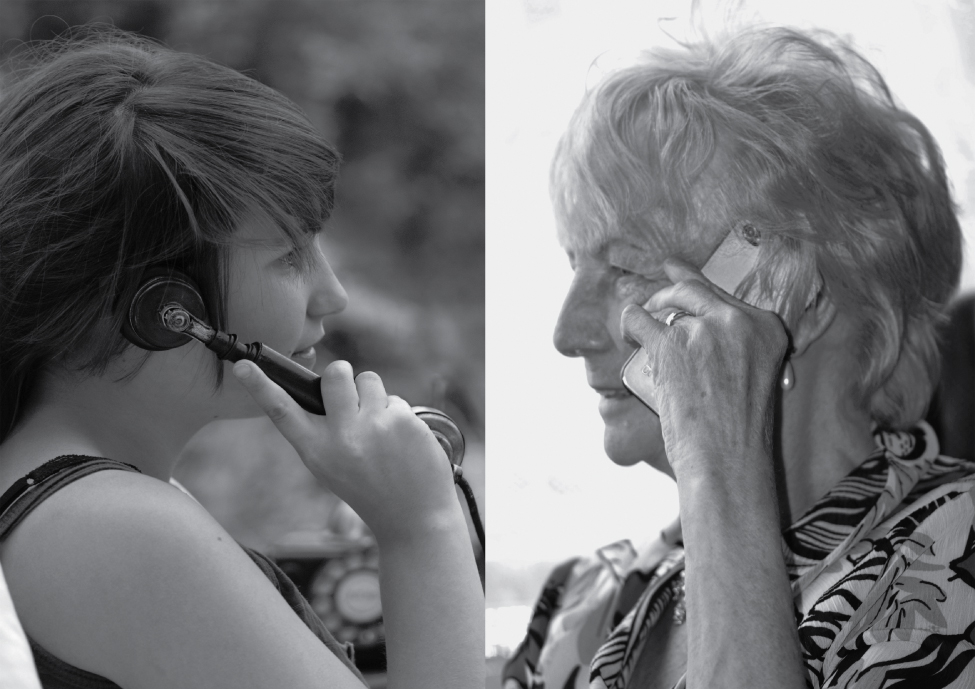
The accessory structures too have lowered activity, generating thinner hair and nails, and reduced amounts of sebum and sweat. A reduced sweating ability can cause some elderly to be intolerant to extreme heat. Other cells in the skin, such as melanocytes and dendritic cells, as well go less active, leading to a paler peel tone and lowered immunity. Wrinkling of the skin occurs due to breakup of its structure, which results from decreased collagen and elastin production in the dermis, weakening of muscles lying nether the skin, and the inability of the skin to retain acceptable moisture.
Many anti-aging products can exist plant in stores today. In full general, these products endeavour to rehydrate the skin and thereby make full out the wrinkles, and some stimulate skin growth using hormones and growth factors. Additionally, invasive techniques include collagen injections to plump the tissue and injections of BOTOX® (the proper name brand of the botulinum neurotoxin) that paralyze the muscles that crease the skin and cause wrinkling.
Vitamin D Synthesis
The epidermal layer of human skin synthesizes vitamin D when exposed to UV radiation. In the presence of sunlight, a form of vitamin D3 called cholecalciferol is synthesized from a derivative of the steroid cholesterol in the peel. The liver converts cholecalciferol to calcidiol, which is then converted to calcitriol (the agile chemical form of the vitamin) in the kidneys. Vitamin D is essential for normal assimilation of calcium and phosphorous, which are required for healthy bones. The absence of dominicus exposure tin pb to a lack of vitamin D in the body, leading to a condition called rickets, a painful condition in children where the bones are misshapen due to a lack of calcium, causing bowleggedness. Elderly individuals who suffer from vitamin D deficiency can develop a status called osteomalacia, a softening of the basic. In present twenty-four hour period society, vitamin D is added as a supplement to many foods, including milk and orange juice, compensating for the demand for sun exposure.
In add-on to its essential role in os health, vitamin D is essential for general immunity confronting bacterial, viral, and fungal infections. Recent studies are too finding a link between insufficient vitamin D and cancer.
Chapter Review
The skin plays of import roles in protection, sensing stimuli, thermoregulation, and vitamin D synthesis. It is the first layer of defense force to prevent dehydration, infection, and injury to the rest of the trunk. Sweat glands in the skin allow the skin surface to cool when the body gets overheated. Thermoregulation is also achieved by the dilation or constriction of estrus-conveying blood vessels in the skin. Immune cells present among the pare layers patrol the areas to keep them free of foreign materials. Fat stores in the hypodermis assist in both thermoregulation and protection. Finally, the peel plays a office in the synthesis of vitamin D, which is necessary for our well-beingness but non easily available in natural foods.
Review Questions
In humans, exposure of the peel to sunlight is required for ________.
- vitamin D synthesis
- arteriole constriction
- folate production
- thermoregulation
Ane of the functions of the integumentary system is protection. Which of the following does non directly contribute to that role?
- stratum lucidum
- desmosomes
- folic acrid synthesis
- Merkel cells
An individual using a sharp knife notices a minor corporeality of blood where he just cut himself. Which of the following layers of peel did he accept to cut into in order to drain?
- stratum corneum
- stratum basale
- papillary dermis
- stratum granulosum
Every bit you are walking down the beach, you encounter a dead, dry, shriveled-upward fish. Which layer of your epidermis keeps you from drying out?
- stratum corneum
- stratum basale
- stratum spinosum
- stratum granulosum
If yous cutting yourself and leaner enter the wound, which of the following cells would assistance get rid of the bacteria?
- Merkel cells
- keratinocytes
- Langerhans cells
- melanocytes
Disquisitional Thinking Questions
Why do people sweat excessively when exercising exterior on a hot day?
Sweating cools the torso when it becomes warm. When the torso temperature rises, such equally when exercising on a hot twenty-four hour period, the dermal blood vessels dilate, and the sweat glands brainstorm to secrete more sweat. The evaporation of the sweat from the surface of the skin cools the body past dissipating oestrus.
Explicate your skin'south response to a driblet in body core temperature.
When the core trunk temperature drops, the body switches to rut-conservation mode. This can include an inhibition to excessive sweating and a decrease of claret flow to the papillary layers of the skin. This reduction of blood flow helps conserve torso heat.
Glossary
- Meissner corpuscle
- (also, tactile corpuscle) receptor in the skin that responds to light touch
- Pacinian corpuscle
- (also, lamellated corpuscle) receptor in the pare that responds to vibration
- rickets
- affliction in children acquired by vitamin D deficiency, which leads to the weakening of bones
- vitamin D
- compound that aids assimilation of calcium and phosphates in the intestine to improve os health
Source: https://opentextbc.ca/anatomyandphysiologyopenstax/chapter/functions-of-the-integumentary-system/
0 Response to "in order to retain heat, what occurs in the skin on a cold day?"
ارسال یک نظر